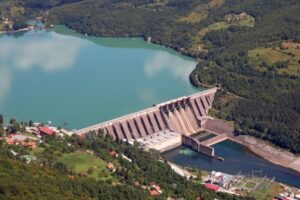
The public utility industry has been undergoing a significant transformation, thanks to the power of Artificial Intelligence (AI). AI has emerged as a game-changer, revolutionizing the way public utilities operate and deliver services. In this blog post, we will explore the profound impact of AI in the public utility industry and how it is revolutionizing operations, enhancing efficiency, and improving customer experiences.
- Advanced Grid Management: AI is transforming grid management by leveraging real-time data and predictive analytics. Through AI algorithms, public utilities can analyze vast amounts of data from smart meters, weather patterns, and energy consumption to optimize grid operations. This enables utilities to balance supply and demand, predict load fluctuations, and proactively address potential issues. AI-powered grid management leads to improved reliability, reduced energy waste, and enhanced operational efficiency.
- Predictive Maintenance: One of the most significant advantages of AI in the public utility industry is predictive maintenance. By harnessing AI algorithms, utilities can analyze sensor data, historical patterns, and machine learning models to predict equipment failures before they occur. This proactive approach allows utilities to schedule maintenance activities, reduce downtime, and optimize asset management. Predictive maintenance not only improves reliability but also reduces costs associated with reactive repairs.
- Energy Optimization and Demand Response: AI enables public utilities to optimize energy consumption and demand response programs. By analyzing consumption patterns, weather data, and customer behavior, AI algorithms can provide personalized recommendations to customers for energy efficiency. Utilities can also leverage AI to manage demand response programs effectively, balancing energy supply and demand during peak periods. This leads to reduced energy consumption, cost savings, and a more sustainable energy ecosystem.
- Customer Engagement and Personalization: AI-powered chatbots and virtual assistants are transforming customer engagement in the public utility industry. These intelligent systems can handle customer inquiries, provide personalized recommendations, and offer self-service options. By leveraging natural language processing and machine learning, AI-powered chatbots enhance customer experiences, reduce response times, and improve overall satisfaction. Utilities can provide personalized energy usage insights, billing information, and outage updates, fostering better customer relationships.
- Data Analytics and Decision-Making: AI-driven data analytics empowers public utilities to make data-driven decisions. By analyzing vast amounts of data, utilities can gain valuable insights into energy consumption patterns, customer behavior, and operational efficiency. AI algorithms can identify trends, anomalies, and patterns that humans may miss, enabling utilities to optimize resource allocation, identify cost-saving opportunities, and improve overall performance.
- Cybersecurity and Grid Resilience: As public utilities become more digitized, AI plays a crucial role in enhancing cybersecurity and grid resilience. AI algorithms can detect anomalies, identify potential cyber threats, and respond in real-time to protect critical infrastructure. By continuously monitoring and analyzing data, AI helps utilities stay ahead of cyberattacks, safeguard customer data, and ensure the reliability and security of the grid.
- Remote Site Security: AI security cameras can monitor sites for security and public safety. AI intruder detection can include licence plate identification, gun shot detection, infrared tagging, loud speaker alert and law enforcement notification.